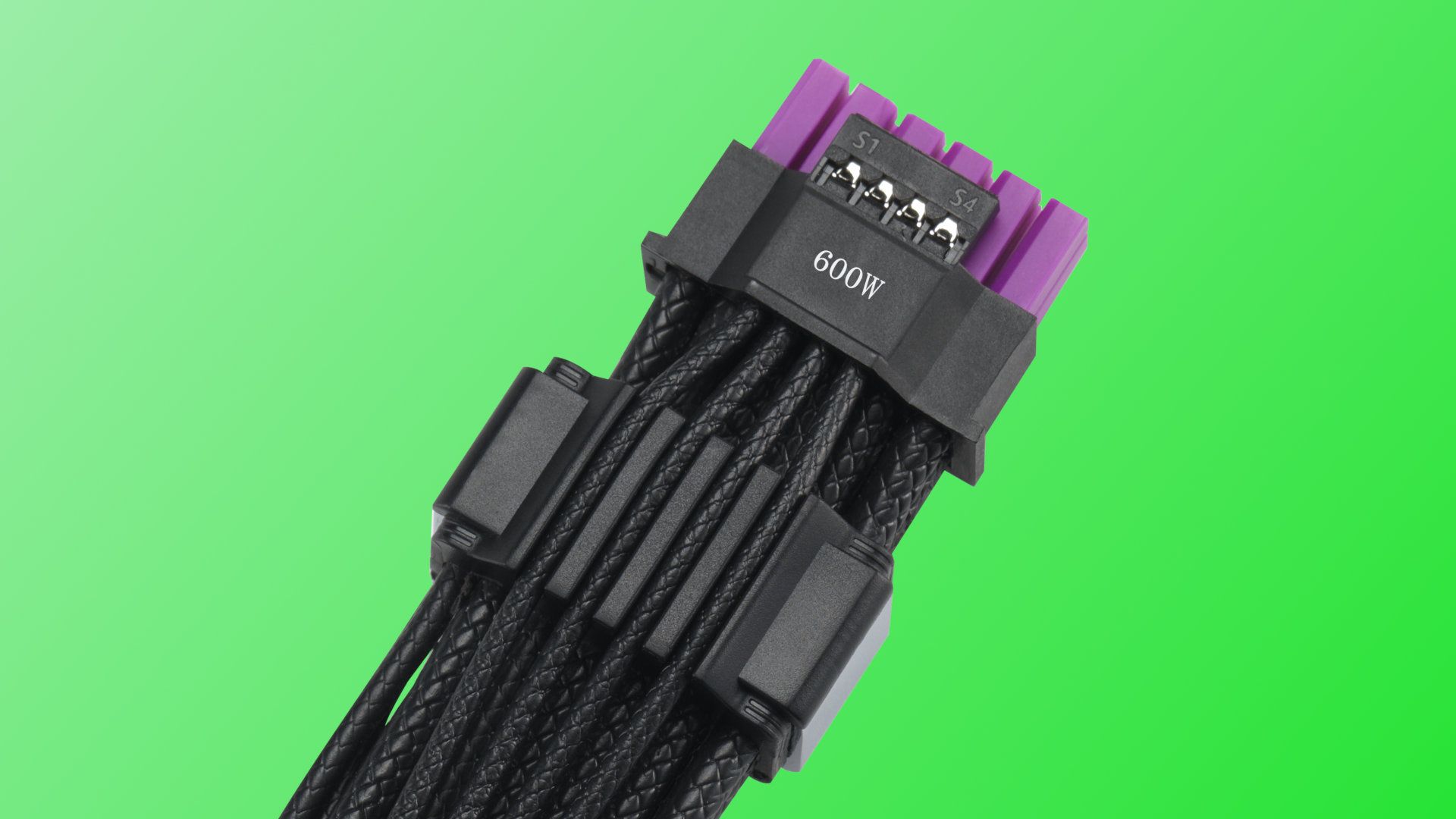
First test of new ROG Equalizer cable intended to be overkill for your GPU isn’t as clear cut as one might expect
The article covers initial testing of Asus’s ROG Equalizer cable, a new power delivery solution aimed at addressing recent graphics card reliability issues. Der8auer conducted the testing, examining whether the cable lives up to Asus’s claims about improved power distribution.
Asus markets the ROG Equalizer as a significant upgrade over standard 12V-2x6 and 12VHPWR cables. The company claims it can handle 17 amps of current compared to the standard 9.2 amps, and that it provides better load balancing across individual pins. These improvements are intended to reduce power delivery failures and overheating that have plagued high-end graphics cards in recent years.
However, the testing results prove inconclusive. The cable contains no active components—meaning it doesn’t actively regulate or redistribute power—which raises questions about how passive design changes alone could significantly improve power delivery characteristics. This limitation appears reflected in the test results, which don’t clearly demonstrate the cable’s superiority over standard solutions.
The ROG Equalizer represents one of many market responses to the “melty graphics cards” problem that has persisted across multiple GPU generations. Rather than manufacturers redesigning problem connectors themselves, companies are attempting to address the issue through ancillary products: specialized cables, upgraded power supplies, and other peripherals meant to provide reassurance to consumers.
The inconclusive testing suggests that while the ROG Equalizer may offer some marginal improvements, it’s not a definitive solution to the underlying power delivery challenges.