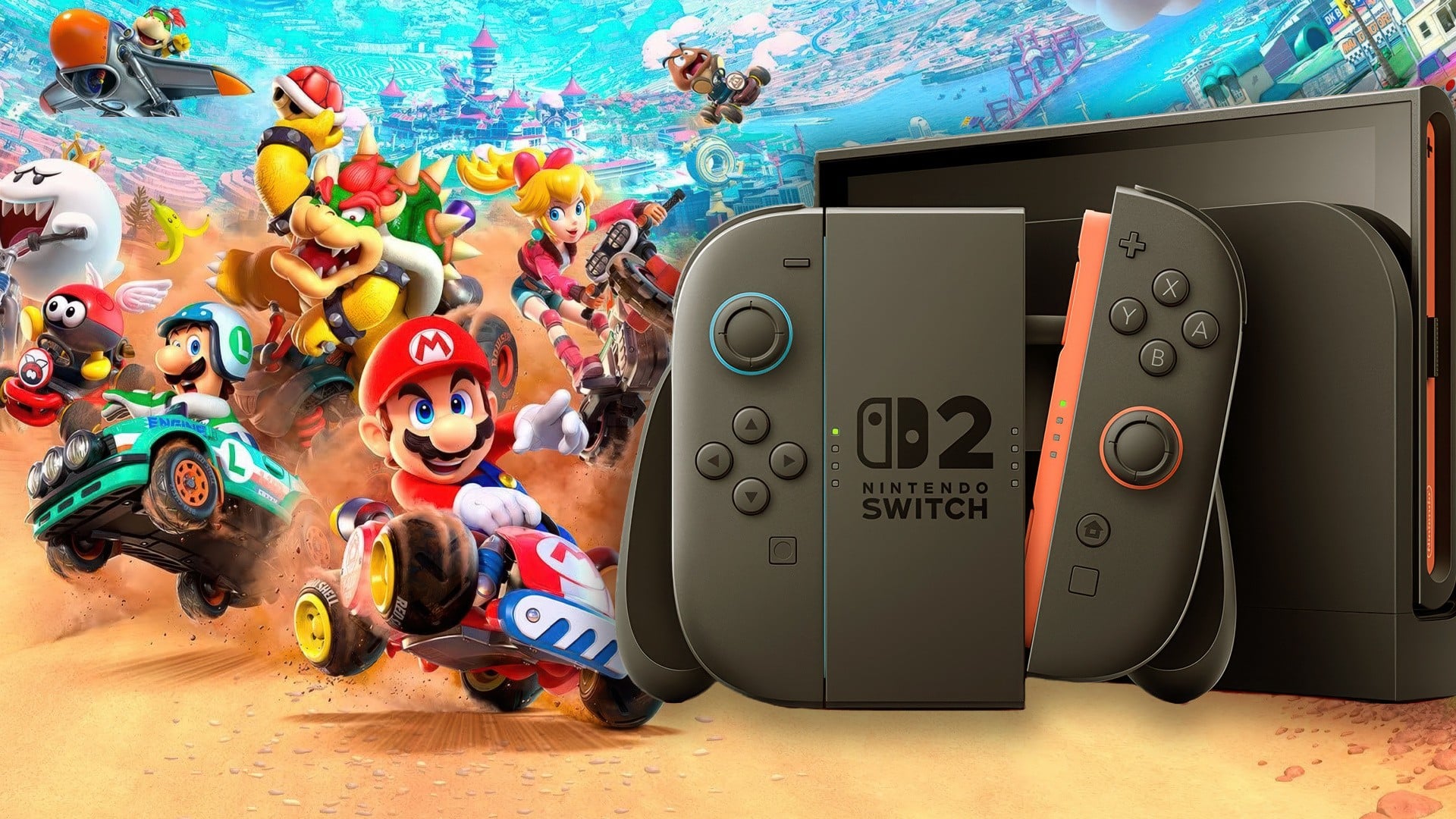
Feature: Nintendo Switch 2 - Year One: The Digital Foundry Verdict
The Nintendo Switch 2’s first year has solidified its position as a meaningful generational upgrade. Technical analysis reveals significant performance improvements: resolutions are frequently quadrupled compared to Switch originals, while frame rates often double. Games that struggled at unstable or sub-30fps on the original Switch now maintain locked 60fps performance on the successor. The T239 processor, initially speculated about during pre-launch cycles, has proven capable of delivering these substantial gains, with DLSS technology playing a key role in the hardware’s performance scaling.
Nintendo’s software strategy proved remarkably predictable, validating established console launch patterns. The company released 13 first-party titles in Year One, with industry forecasts successfully identifying 10 of these releases. The lineup encompassed six mainline franchise entries—Donkey Kong, Mario Kart, Mario Party, Metroid, Pokémon, Yoshi, and Star Fox—alongside two new intellectual properties and two non-mainline releases in the Pokémon and Zelda franchises. Marquee franchises like Mario Kart and Pokémon delivered expected Year One entries, while long-awaited projects like Metroid Prime 4 finally materialized.
Despite some concerns about the Switch 2’s display implementation, the consensus after 12 months suggests Nintendo successfully executed its generational transition, delivering both hardware performance gains that matter in practice and software content that maintains engagement and franchise momentum.