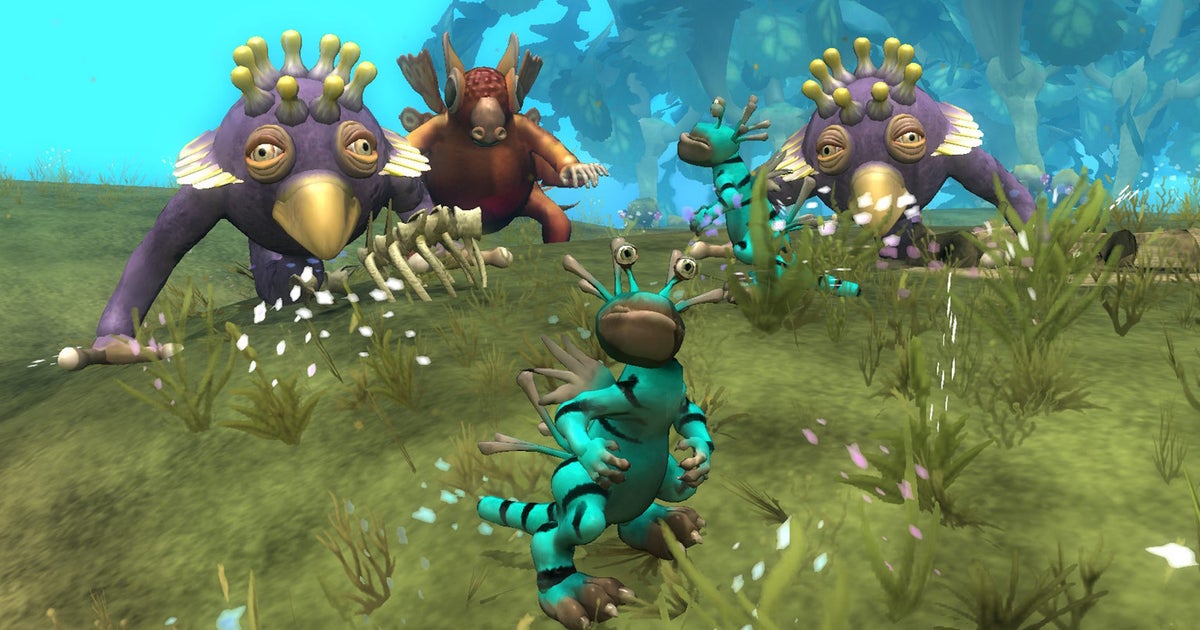
Maxis devs detail the operational challenges behind Spore’s nine-year development cycle
A new retrospective on Maxis’ creature simulation game Spore outlines the operational challenges that shaped its nine-year development cycle. Speaking to The Design Room, key team members, including chief designer and Maxis founder Will Wright, explained that rapid team growth and limited publisher oversight made it difficult to unify the game’s vision.
Wright openly acknowledged what became one of Spore’s most prominent criticisms: the game felt like five separate games awkwardly combined together rather than a cohesive experience. He candidly stated that “Spore was overall a failed game design,” attributing this partly to operational challenges during development. Better management and coordination could have resulted in a much stronger final product.
As Maxis expanded during development, maintaining a unified creative direction proved difficult, resulting in disconnected gameplay segments that didn’t integrate smoothly. Despite these structural flaws, Wright acknowledged that the game contained innovative ideas and “magic,” indicating it pushed boundaries in creature simulation and world-building design.
This retrospective sheds light on the complexities of managing large-scale game development, where technical and creative ambitions must be balanced with practical constraints of team coordination, organizational structure, and publisher oversight.