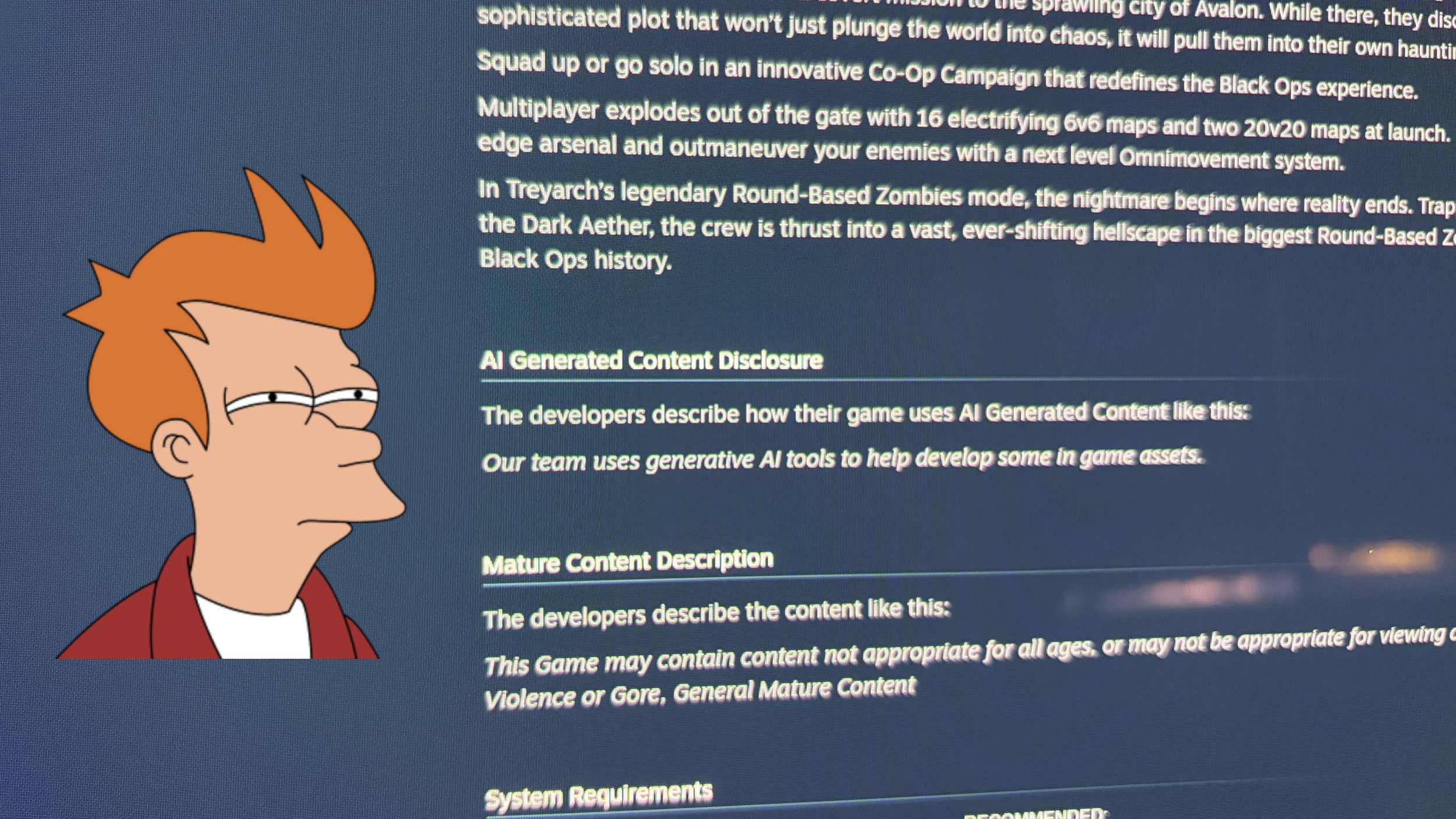
“The ‘AI Stigma’ is real and severely punishes developers”: A new study shows how much using AI in games hurts sales, and the numbers are hard to believe
A new study reveals that disclosing AI use in game development significantly impacts sales, creating what researchers term an “AI Stigma” among consumers. The findings come as Steam, the world’s largest PC gaming platform, continues enforcing AI disclosure requirements implemented in January 2024. Under these policies, developers must clearly label games that utilized artificial intelligence during any stage of development.
The research indicates that games bearing AI disclosure labels experience measurable sales penalties compared to those without such disclosures. While AI has become increasingly prevalent in modern game development—from graphics rendering to level design and asset creation—consumer perception remains cautious. This stigma represents a notable market headwind for independent and smaller studios that leverage AI tools to streamline production pipelines.
The study’s findings underscore a significant tension in the gaming industry: while AI adoption accelerates development efficiency and reduces costs, it simultaneously creates consumer skepticism that impacts commercial performance. Players appear concerned about authenticity and craftsmanship, viewing AI-assisted development as a potential quality or creativity concern. The disclosure requirement, intended to provide transparency, inadvertently highlights these concerns on game storefronts.
As AI tools become more accessible and capable, the gaming sector faces a unique challenge—balancing technological progress with consumer sentiment. The commercial penalties observed in the study suggest that studios may need to reconsider their public messaging around AI use, or the industry may need to shift perceptions about what AI-assisted development means for game quality.