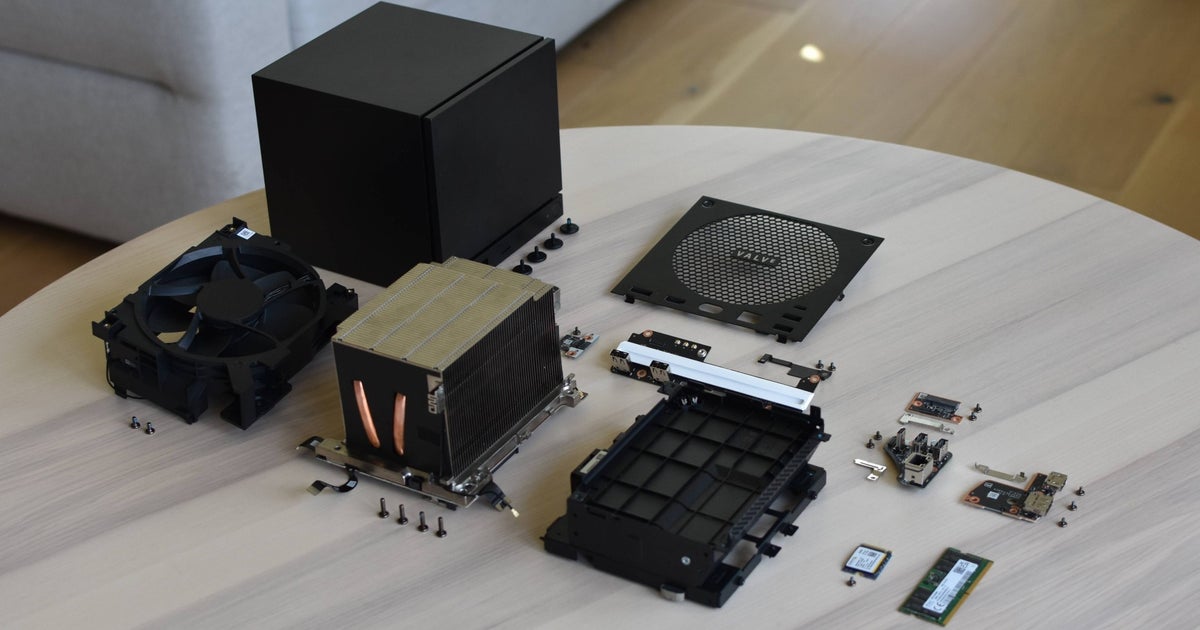
Disassembling the Steam Machine suggests Valve are protecting its precious RAM by burying it under a dozen other parts
A journalist’s accidental complete teardown of Valve’s Steam Machine reveals the device’s deliberately complex internal architecture. What began as a simple inspection of the RAM configuration turned into a full disassembly, exposing the compact PC’s heavily layered structure. The Steam Machine employs a Russian Doll-like design, with components layered such that accessing any internal element requires removing multiple surrounding parts in sequential order.
The disassembly resulted in numerous individual pieces spread across the journalist’s desk, though the device remained reassemblable afterward. The architecture appears intentionally designed to protect the RAM and other critical components by burying them beneath a dozen other parts within the device’s tight form factor.
This design approach suggests Valve prioritized component protection and structural integrity over ease of access and serviceability. The densely packed arrangement means that any internal maintenance or inspection requires systematic, careful disassembly of the entire device. The engineering demonstrates the complex trade-offs involved in creating miniaturized PC hardware, where space constraints and protective requirements compete with user-friendliness and repairability.