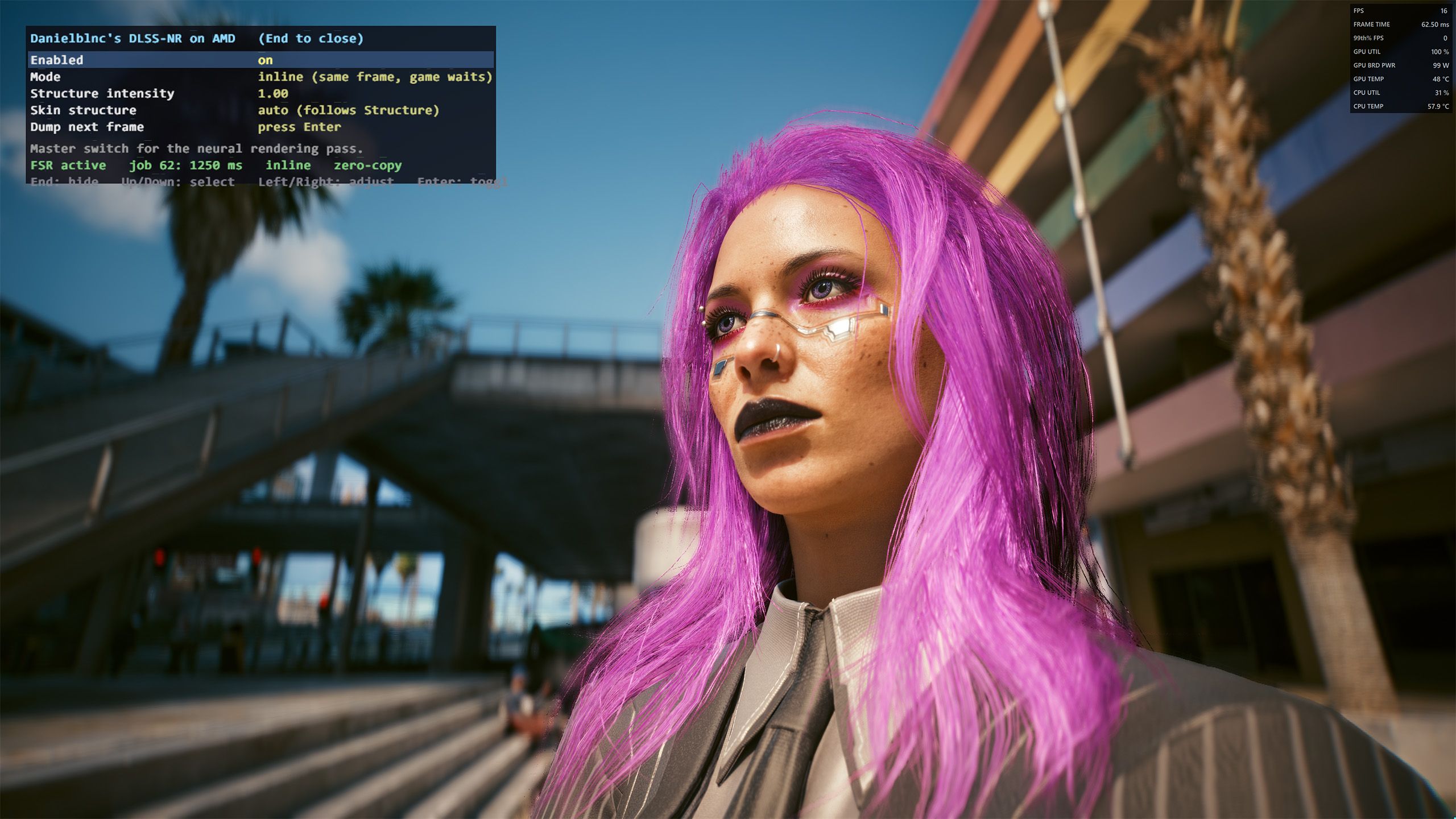
AMD presents new method of handing indirect lighting off to an image generation model: ‘frame-by-frame’ solution could be part of AMD’s answer to DLSS 5 someday
AMD has presented a new approach to real-time rendering by treating global illumination as an image generation problem. The company’s research team published a paper titled “Temporally stable generative illumination with a one-step diffusion model” that outlines a technique for generating more realistic-looking lighting on a frame-by-frame basis using diffusion models.
This development represents AMD’s push toward neural rendering technology, which the company has promised will come to Radeon graphics cards and gaming consoles through its FSR Diamond initiative. The frame-by-frame image generation approach could potentially become part of AMD’s long-term answer to NVIDIA’s DLSS 5 technology.
The technique leverages generative AI to handle indirect lighting calculations, which are traditionally computationally expensive. By offloading this work to an image generation model, AMD aims to improve visual quality while maintaining real-time performance. The “temporally stable” aspect of the approach is significant, as it ensures consistency between frames, preventing the flickering and artifacts that can plague AI-generated imagery in dynamic scenes.
This research demonstrates AMD’s commitment to exploring AI-accelerated rendering techniques as a path forward for both PC graphics and console gaming. As the gaming industry increasingly looks to AI to solve traditionally difficult rendering problems—such as calculating complex lighting interactions—AMD’s work could influence how future games are developed and optimized for its hardware.