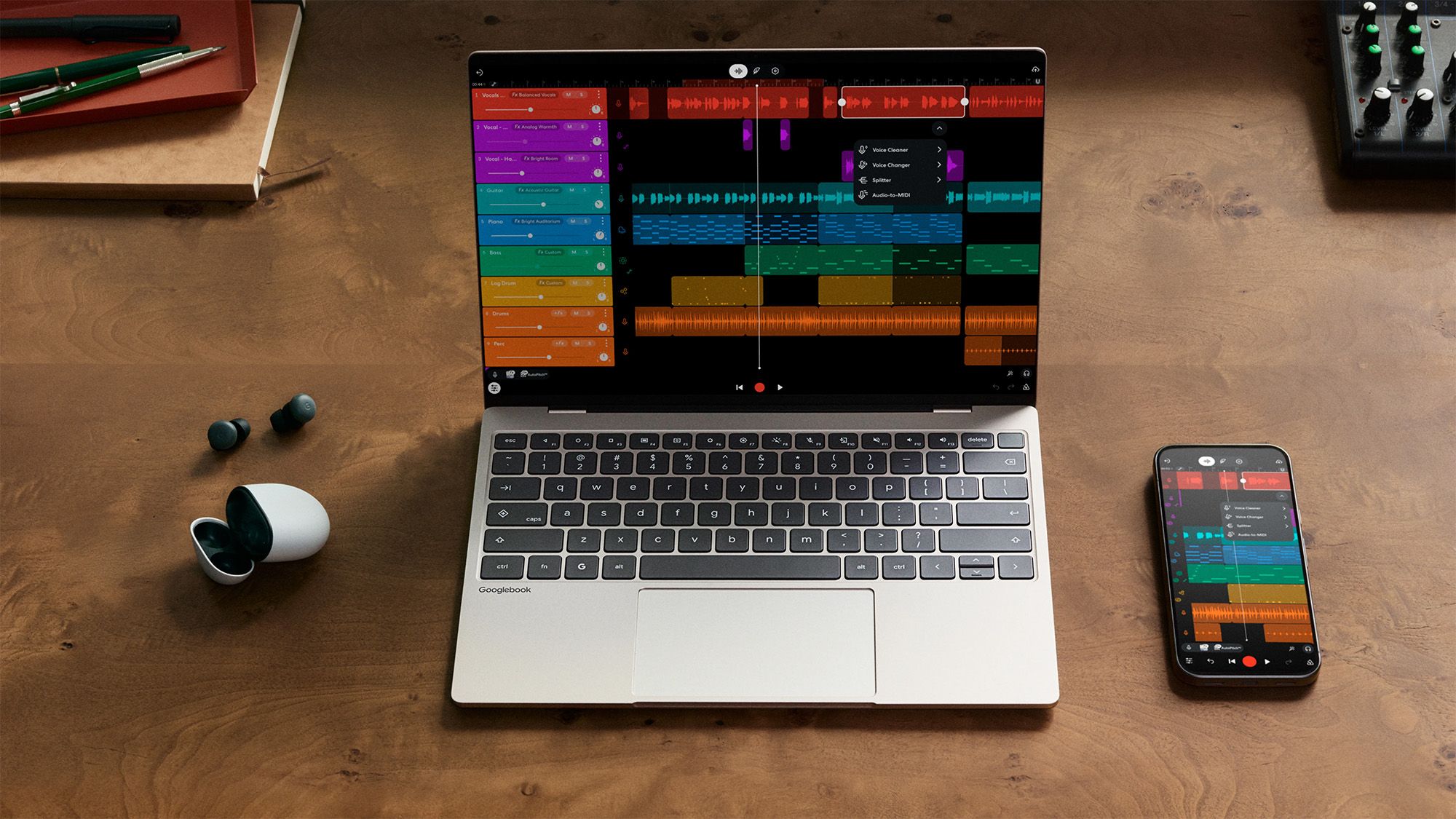
Googlebooks are built almost entirely on Gemini AI hype. Can they disrupt Windows?
Google has announced a new line of premium laptops called ‘Googlebooks,’ marking a significant expansion of the company’s laptop offerings beyond the budget-focused Chromebook line. The new devices will feature powerful processors from Intel and Qualcomm, specifically the Intel Core Ultra Series 3 (Panther Lake) and Qualcomm Snapdragon X Elite, positioning them as competitive offerings in the premium laptop market.
The Googlebooks lineup will launch with pricing starting at $899 for an Acer model, with additional devices from major manufacturers ASUS, Dell, HP, and Lenovo scheduled to release on October 4, 2026. Among the five flagship launch models, Google has emphasized specifications designed to appeal to consumers seeking high-end portable computing, including high-resolution touchscreen displays and innovative haptic touchpad technology.
Central to the Googlebooks marketing is Google’s Gemini AI platform. The company’s promotional messaging emphasizes “the best of Gemini meets a whole new kind of laptop,” indicating that AI capabilities will be a defining feature of these devices. To support this focus, the laptops include built-in Neural Processing Units (NPUs) designed to handle AI workloads efficiently.
The launch represents Google’s strategy to challenge the Windows laptop market at the premium tier, moving beyond its traditional position in the budget segment. By combining AI-centric marketing with high-end hardware specifications and established laptop manufacturers’ production and distribution capabilities, Google appears to be making a concerted push to gain market share in a segment traditionally dominated by Windows-based systems.