Watch the Disturbing French Horror Classic that Inspired Halloween
John Carpenter’s seminal 1978 horror film Halloween features one of cinema’s most iconic villains in Michael Myers, whose terrifying white mask has become synonymous with slasher horror. While Carpenter attributed the mask’s stark design to budget constraints—humorously noting he “didn’t have any money to make a mask”—he later acknowledged potential inspiration from an earlier film. In a 2003 DVD special feature, Carpenter revealed that the mask may have been influenced by Eyes Without a Face, a French horror classic from 1960.
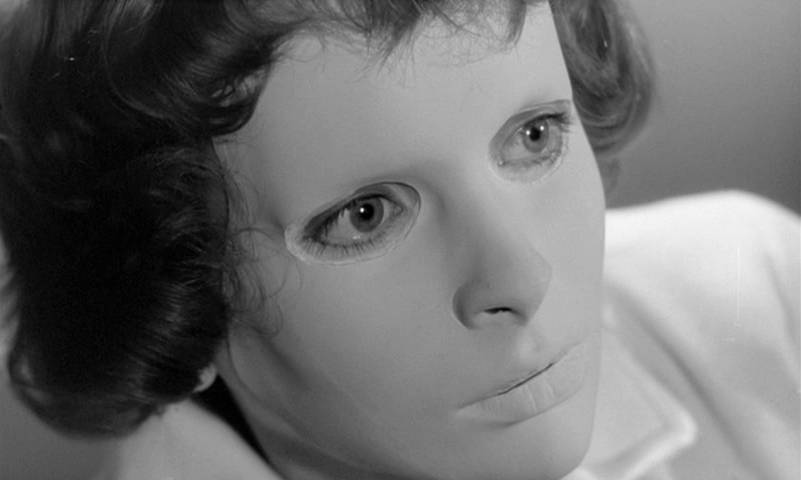
The 1960 film’s mask is similarly white and featureless, and many argue it’s even more disturbing than Myers’ version. The mask belongs to Christiane (played by Édith Scob), a young woman severely disfigured in a car accident. Rather than concealing her injuries grotesquely, the mask replicates Scob’s delicate, ethereal beauty with precise accuracy. However, the mask’s inability to move or express emotion—its smooth, immobile surface—creates an unsettling contrast that evokes both tragedy and dread. This design choice transforms what could have been a simple prosthetic into something deeply psychological and haunting.
The parallel between these two films illustrates how effective horror design often relies on subtlety rather than gore. Both masks derive their power from what they represent: the erasure of humanity and individuality through emotionless surfaces. Carpenter’s acknowledgment of the possible influence highlights how Eyes Without a Face remains a foundational work in horror cinema, continuing to impact filmmakers decades after its release. The 1960 French film stands as a testament to the genre’s capacity to generate terror through elegant, restrained visual storytelling.