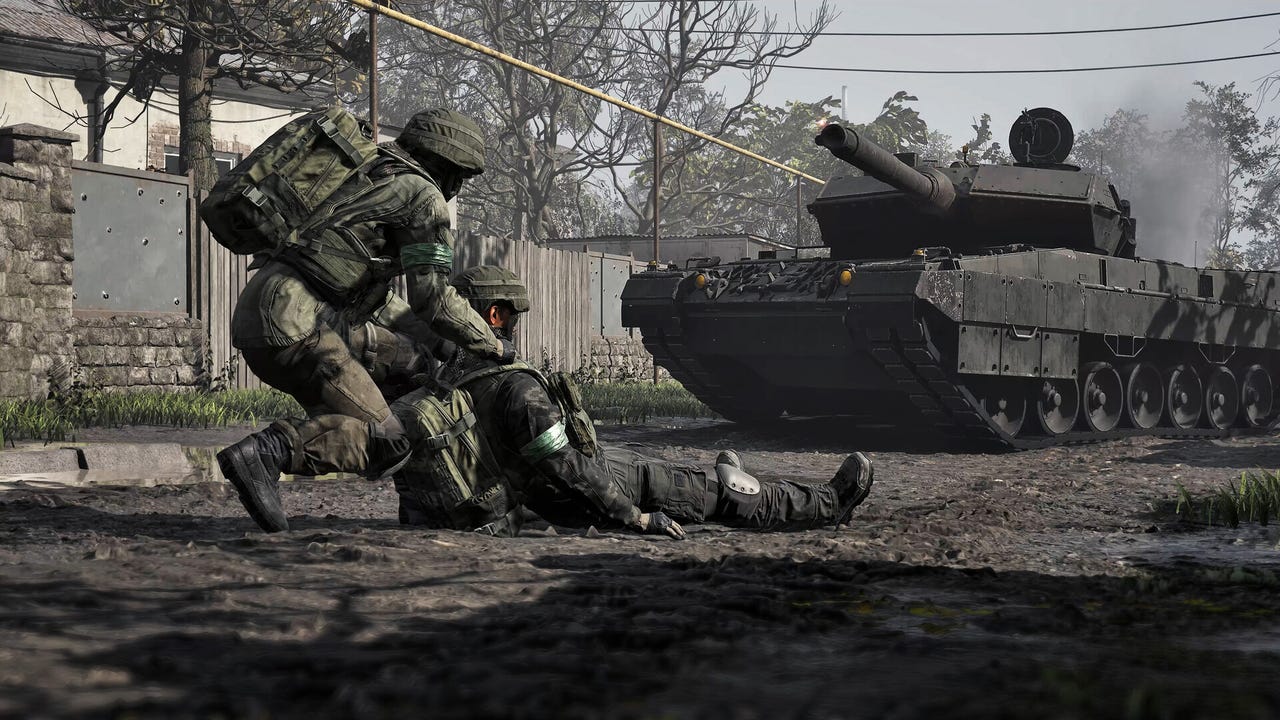
Blue Team Only Wins 15% of Its Wardogs Games — We Asked a Color Psychologist Why
In the free-for-all sandbox military game Wardogs, players have noticed a striking statistical anomaly: Blue Team (Lonestar) wins only 15% of matches despite having identical equipment and equal chances to win as its competitors. Red Team (Valkyra) and Green Team (Manticore) both significantly outperform the blue faction, leading to the Blue Team becoming an in-joke within the game’s community.
The disparity is particularly puzzling because Wardogs provides all three factions with the same arsenal of weapons and vehicles—tanks, artillery, mortars, and helicopters—while they differ only in cosmetic appearance and aesthetic theming. Red Team sports a Soviet military look, Green Team wears Persian-inspired gear, and Blue Team appears as a Western paramilitary force. From a mechanical standpoint, there should be no advantage for one team over another.
IGN investigated the phenomenon by consulting a color psychologist to explore whether the color blue itself might be contributing to the team’s poor performance. The article suggests that psychological factors—such as color perception, team morale, or even unconscious bias—could be influencing player behavior and decision-making when fighting as or against the blue faction. The investigation highlights how video games can surface unexpected psychological effects, where factors seemingly disconnected from gameplay mechanics appear to have measurable real-world impacts on player performance and outcomes.