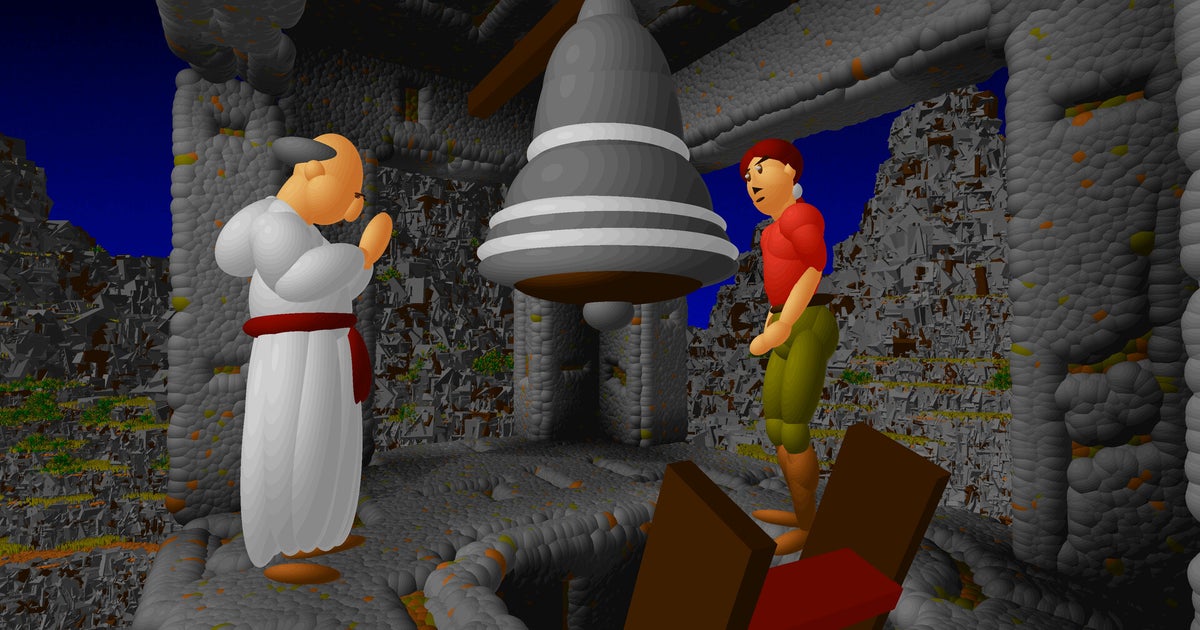
32-year-old “ellipsoid” horror game Ecstatica gets a PC re-release today, showing us an alternative timeline in which polygonal 3D never became dominant
Ecstatica, a horror game from 1994, is receiving a PC re-release today. The game is notable for its use of ellipsoid-based 3D rendering, an alternative to the polygon-based 3D graphics that became the industry standard. Rather than using traditional polygon meshes to construct 3D models, Ecstatica employed ellipsoids as its fundamental rendering unit, creating a visually distinct aesthetic.
The article frames this re-release as an opportunity to explore an alternative technological path in gaming history. The author uses Ecstatica as an example of historical game development techniques that offer insight into different approaches that could have shaped the industry’s trajectory. While ellipsoid-based rendering didn’t become the dominant approach in game development, its preservation and re-release allows contemporary audiences to experience this unconventional technical solution.
The re-release highlights the value of game preservation efforts and revisiting experimental technologies from gaming’s early three-dimensional era. Ecstatica demonstrates the creative problem-solving of 1990s developers working within hardware constraints, and serves as a reminder of the diverse technological innovations that emerged before the industry standardized on polygon-based rendering.