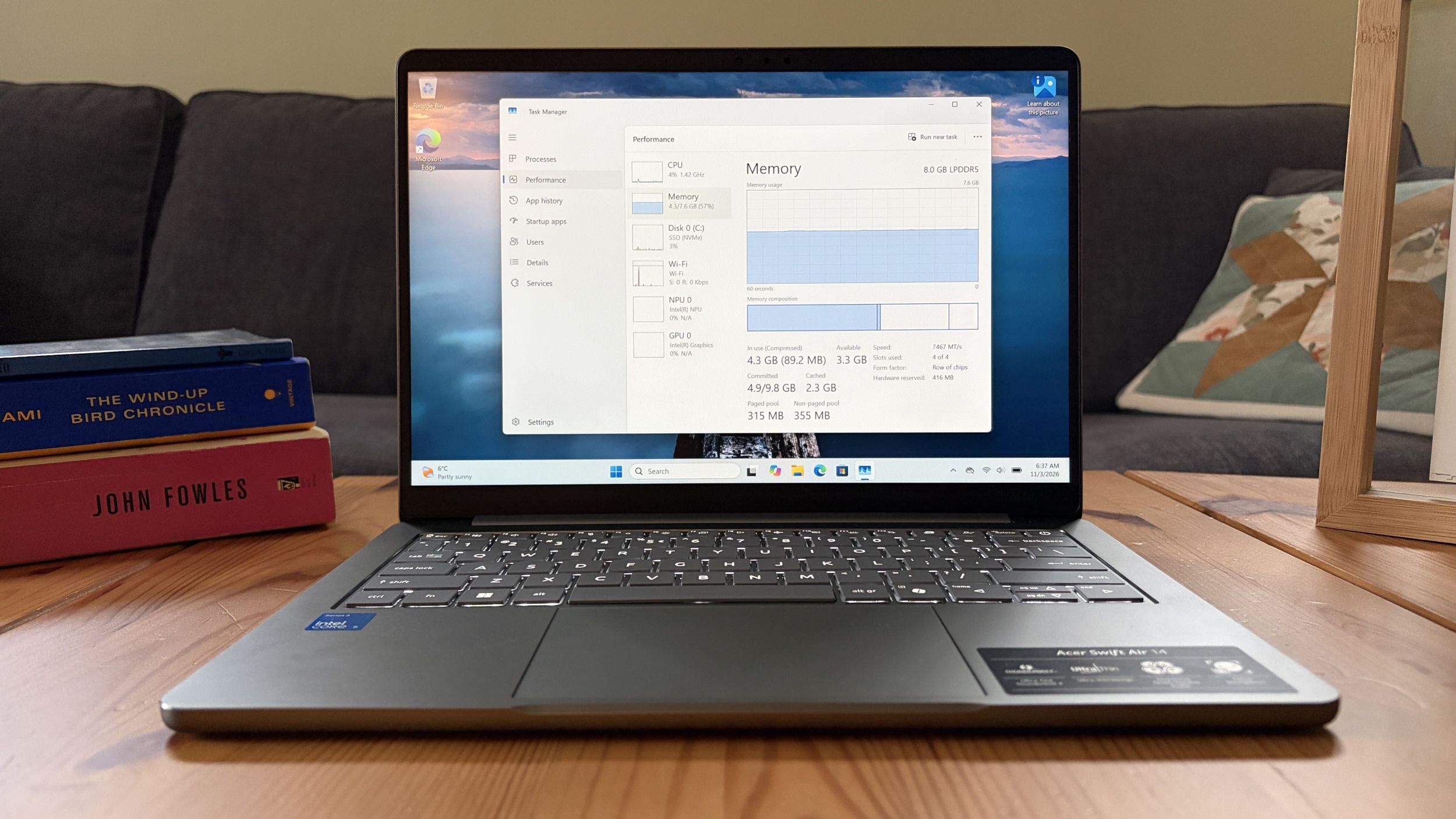
Does Windows 11 26H2 actually use less RAM? I tested to find out.
Microsoft has announced optimizations to Windows 11 designed to improve performance on systems with limited RAM, particularly 8GB devices. The company claims the latest updates deliver up to 20% better responsiveness on 8GB PCs, with multitasking up to 40% faster according to lab tests, compared to performance from a year ago. These improvements apply across systems with 4GB, 8GB, 16GB, and beyond, with specific optimization tuning for each RAM configuration.
The optimizations address a timely market need. RAM and storage shortages are driving up PC component costs, and manufacturers are reviving 8GB RAM models to help keep consumer PC prices more accessible. By reducing Windows 11’s memory footprint and improving efficiency, Microsoft is making the operating system more practical for budget-conscious buyers in an inflationary hardware market.
Microsoft has been shipping these performance improvements quietly through recent Windows 11 updates rather than announcing them as major features. The company’s approach focuses on three areas: better memory utilization, memory bloat protection, and additional optimization. Testing on an 8GB Acer Swift Air 14 laptop with an Intel Core Series 3 chip provided mixed results, with performance improvements particularly noticeable in lighter workloads but varying on heavier tasks.