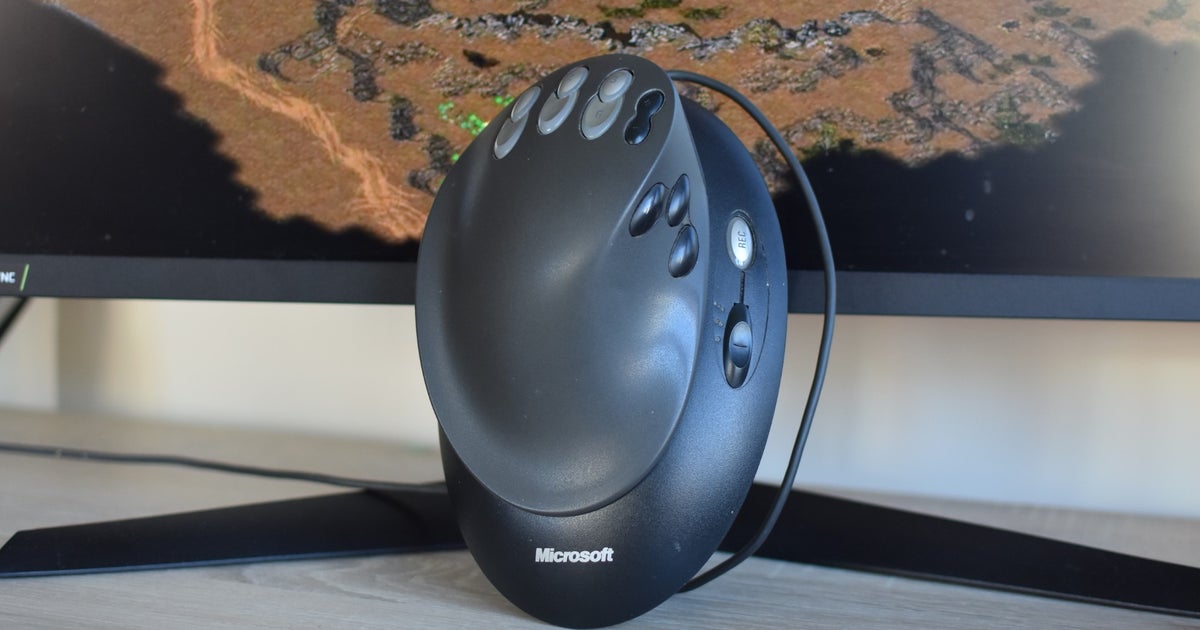
Microsoft’s SideWinder Strategic Commander was a failed attempt to reimagine RTS controls. 23 years later, why are some players still using it?
Microsoft’s SideWinder Strategic Commander, unveiled on March 1, 2000, at the company’s Gamestock event, was an ambitious attempt to fundamentally reimagine real-time strategy (RTS) game controls on PC. The peripheral represented the first and only major effort to rethink the established keyboard-and-mouse setup that has dominated RTS gaming for decades, where players split their attention between keyboard input for commands and a mouse for camera control, unit selection, and positioning.
While peripheral manufacturers have produced numerous minor variations on the traditional RTS control scheme—typically through additional buttons and customization—the Strategic Commander stood apart in its radical approach to solving inherent control limitations. Despite its innovation, the hardware failed to achieve commercial success upon release.
Yet 23 years later, the Strategic Commander has become an unexpected survivor in gaming culture. The peripheral has found a dedicated following among certain RTS players who continue using the device, suggesting it possessed distinctive design qualities or ergonomic advantages that resonated with a niche community. This longevity despite commercial failure speaks to both the peripheral’s unique functionality and the gaming community’s embrace of unconventional hardware solutions that address genuine gameplay challenges.
The article frames the Strategic Commander as a fascinating case study in gaming hardware history—a failed innovation that paradoxically achieved a form of immortality through devoted users who recognized its value long after the mainstream market had moved on.